

On his walk One day, toward Niantic’s offices in the Bay Area, senior producer Sakae Osumi noticed everyone staring at him. upward. There’s a solar eclipse going on, a good reason to lean back and look up at the sky, but Osumi has another thought: What if a team worked on a Monster hunter–themed games can recreate the situation—but swap sunglasses and a celestial event for a phone and a giant mean creature?
Monster hunter now not just the answer to that specific question but a larger, more existential problem plaguing Niantic. In 2016, the mobile developer captured lightning in a bottle when Pokémon Go has combined the company’s augmented reality technology with the hugely popular franchise, allowing players to embark on their own Pokémon adventures wherever they are. It was (and still is) a worldwide phenomenon: over 1 billion downloads and annual events around the world (and potentially millions of dollars lost due to players choosing to play while driving recklessly).
In the seven years since, Niantic has struggled to create new games that can even come close to that success. This year, the company laid off hundreds of workers, canceled two projects and closed its Los Angeles office. In 2022, amid layoffs, Niantic shut down four other games, following 2019’s poor performance, Harry Potter: Wizards Unite. As players lose faith that Niantic can create—and sustain—games based on their favorite franchises, Monster hunter now, out September 14, may be its best chance to regain goodwill. If Capcom’s nearly 20-year-old hugely popular franchise doesn’t have traction, it’s hard to imagine where the company could go next.
So whether Monster hunter now Got what it takes? “I can’t give you a better answer than we think this is a fun game,” executive producer Kei Kawai told WIRED. “We built a fun game.”
OK definitely. But it is one small more complicated than that. From the beginning, Kawai said, they sought to create something that was more than just a recreation of her skin Pokémon Go, even if it is the company’s most successful game. Thematically, Niantic and Monster hunter creator Capcom found the franchise well-suited for real-world adventures and wanted to find a way to make that happen. But to do that, Kawai and team wanted to solve the problem of real-time action. “It’s definitely more of a ‘gamey’ game than the other titles we’ve built,” he said. “That was intentional.”
Kawai thought of creating the game in a multi-layered approach. Obviously, games need to be fun and they need to be interesting and engaging. But they also need to challenge players at the right level. “Games need to feel rewarding for your time so you feel like you’re getting more out of it than you’re putting in,” he says.
In a typical Monster hunter In the game, taking down prey is a big deal that can last anywhere from 10 minutes to over an hour, depending on its size and your skills. Sometimes you will need to try multiple times to win. But for a mobile game you can play outdoors in the summer sun, that’s not ideal. The team found that even three minutes seemed too long. Monster hunter now cut meeting time to 75 seconds.
You also don’t have to be constantly tethered to the screen to play—good news for those who may have fallen off a pier or two while focusing on their phone while playing. PoGo hang out. Palicoes, the series’ cat-like companions, will find monsters for you and record these encounters for later use through its “paintball” system. That way you can play while at home or at the office with friends. “You can continue to progress while the phone stays in your pocket, so we don’t force players to look at the screen,” Osumi said.
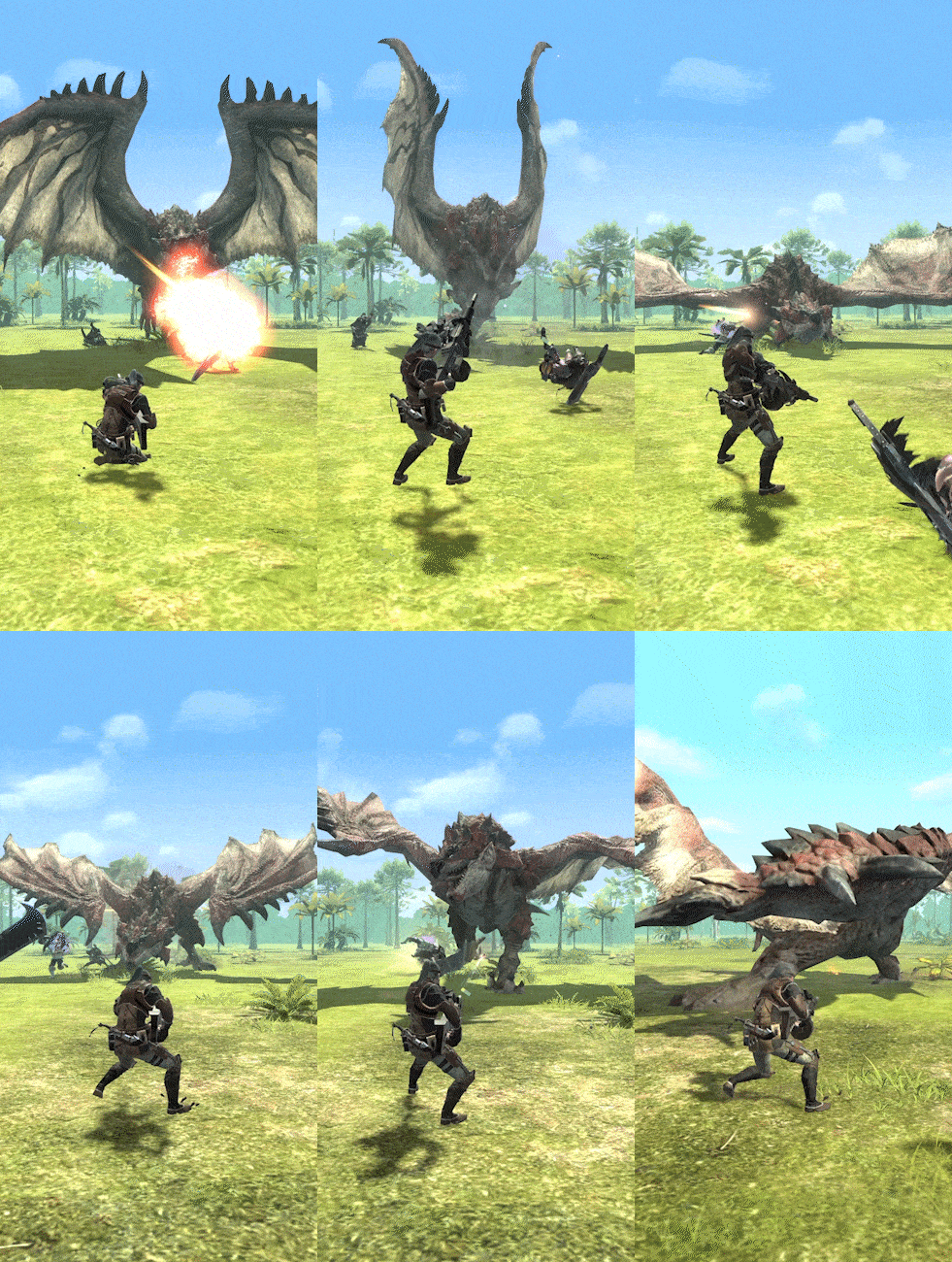
Video: Niantic

Video: Niantic
The team wanted to create a social atmosphere for hunting and capitalize on the reputation Niantic had built for adventures. It encourages players to go out and meet people; Monsters are easier to hunt when you’re with a team, and with paintball guns, you can save hunts to do later with friends. “I think this is fundamentally a social franchise,” Kawai said.
It will have to be—word of mouth can make or break a mobile game. Although Mour hunter The audience is so large, not every major franchise delivers a hugely popular mobile game. Niantic has learned this with Harry Potter: Wizards Unite. However, after several years of fumbling, the company needs to score points. As of Monday, more than 3 million players had pre-registered CurrentlyBut that number is small compared to the global phenomenon Pokémon Goreached 500 million downloads in the first year.
There are only a few games that are capable of becoming chart-toppers, and it’s possible that Niantic will never be able to repeat the success it had with Pokémon Go. However, Osumi is still confident in everything Monster hunter now brought up for discussion, if only to appeal to players’ baser instincts. “I think this is a game that feels natural to people, because hunting is in our DNA,” he said. Point and look up.
#Monster #Hunter #pull #Niantic #slump

 World Innovations: Top Trends Shaping the Future Worldwide
  Global Migration Trends: Understanding the Modern Movement of People
  World Sports: Discover the Most Exciting Global Sporting Events