

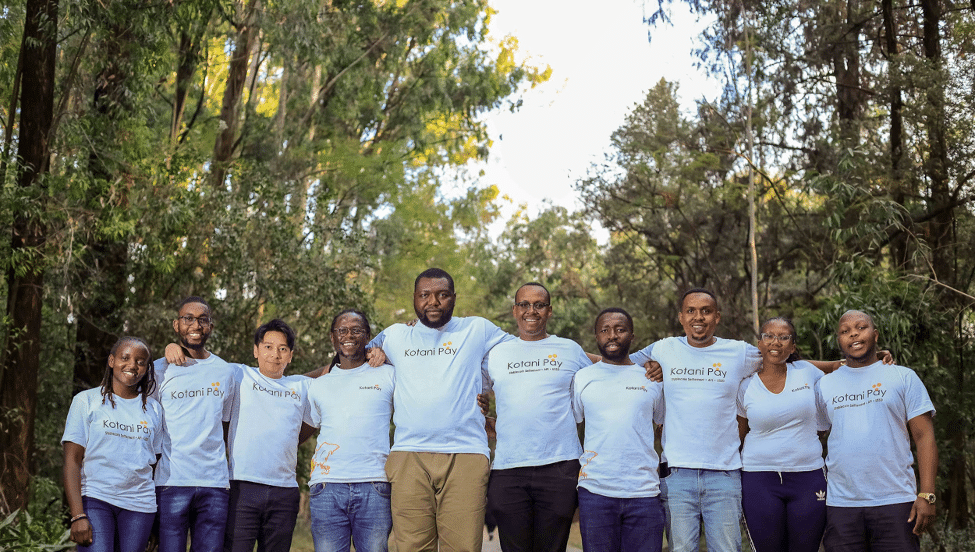

Image credits: Kotani pays
Among the many lofty promises about cryptocurrencies, one of the most laudable is the potential to bring financial access to underserved users. Nairobi-based Kotani Pay is a crypto payments startup with a vision to make cross-border money transfers easier for Africa’s large unbanked population.
The two-year-old startup is targeting a use case involving the livelihoods of hundreds of millions of people, including in Kenya, Ghana, Zambia and South Africa. The startup closed a $2 million pre-seed funding round led by P1 Ventures, with participation from several investors including DCG/Luno and Flori Ventures, with plans to expand further. further to Rwanda, Senegal, Ivory Coast, Tanzania and Nigeria.
According to the World Bank, the sub-Saharan region will receive about $55 billion in remittances this year. In some African countries, remittances account for as much as 20% of GDP, according to United Nations statistics.
Despite their vital role in the African economy, remittances face an insurmountable challenge: high remittance fees. In some countries, the cut can be up to 20% of the amount transferred. Several factors lead to exorbitant costs, including underdeveloped banking systems, asymmetric information, and currency fluctuations. In many cases, families at home do not have a bank account or even official identification to open an account.
Aware of these obstacles in the traditional method of remittance, Kotani proposes the use of blockchain to facilitate remittances to Africa. Specifically, it is mining stablecoins, which are cryptocurrencies pegged to fiat currencies like USD, to transfer money internationally at a lower cost than the old way.
Then to actually withdraw the stablecoins that people keep on their mobile wallets and pay everything in local currency, Kotani built a middleware that connects the blockchains to the local payment network, many of them allow users to send money on feature phones without the Internet by means of communication. protocol is called Unstructured additional service data (USSD), as this demo shows:

Kotani is offering its technologies as a B2B solution, connecting the cryptocurrency platform’s smart contracts on the one hand and mobile money APIs on the other. Some of its major crypto partners include Yellowcard, DCG, Fonbank, Celo’s Valora, Mercy Corps, UNICEF Cryptocurrency Innovation Fund, and Stellar.
The Kotani founder also allows users to “accelerate” or convert their local currency to USD, a solution that is more suitable for businesses at the moment but could open up to retail users in the future. hybrid with the necessary licenses, the founder said. According to the co-founder, the process is carried out by “a network of liquidity providers through partnerships with local forex services and remittance operators that we take in local USD.” from that”.
Most of the money transfers that take place on Kotani — $23 million as of now — are inbound payments. With an enterprise focus, the platform’s average transaction size is $150,000. Like other payment infrastructure providers, Kotani makes money through exchange fees, which average about 1% of total transaction volume, according to Macharia.
The startup is set to introduce other products, including Reconset, a Mediation as a Service, and Money Ledger, a Ledger as a Service solution, following the acquisition of Fuhlstack, a startup. in Nigeria. Fuhlstack founder Lemuel Okoli joins Macharia and Samuel Kariuki as Kotani Pay co-founder.
Cryptocurrency Regulations
With a business capable of altering the balance of foreign reserves, Kotani may already be on the radar of regulators. Macharia acknowledged that central banks in the countries where the company operates were “monitoring these transactions because they oversee all endpoints for banking and mobile money.”
“We work directly with local mobile money operators or regulated partners to ensure that our operations are compliant,” he continued. “Central banks are really excited about some of these use cases and are getting engaged as they develop Central Bank Digital Currencies.”
The crypto regulatory landscape is rapidly changing, dampening investor confidence in some regions such as the United States and generating positive sentiment in others, such as Asia. Overall, Macharia feels “positive” about regulatory developments on the continent.
“We are seeing positive developments in South Africa as Botswana, Mauritius and South Africa all launch Virtual Asset Service Provider Licenses for digital asset Fintech management. MiCa passed by the European Union parliament is another positive development as it regulates stablecoin issuers, on ramps and ramps as well as exchanges,” he said.
“Based on our cooperation with regulators in Kenya such as the Capital Markets Authority, we believe it is only a matter of time before other markets like Kenya, Ghana, Nigeria catch up.”
#Kotani #receives #million #seed #money #African #workers #send #money #home #cryptocurrency #internet #needed #TechCrunch

 World Innovations: Top Trends Shaping the Future Worldwide
  Global Migration Trends: Understanding the Modern Movement of People
  World Sports: Discover the Most Exciting Global Sporting Events